Showing posts with label Yemeni Writers. Show all posts

Sunday, 24 September 2017

'Sana'a Review' e-magazine is here!


After lots of hurdles, along with a group of great Yemeni writers/friends, we launched 'Sana'a Review' online magazine on 22nd September and I'm the editor-in-chief.

The love & support my blog has gotten over the years is beyond what I ever imagined & I want to Give Back! I want to amplify other great Yemeni voices. I want to pass on the spotlight to the great (& emerging) Yemeni writers/journalists/artists/talents. True, Yemen is in a reck & journalists particularly are at most bleak conditions but that's exactly why we need to record what's happening to us now so there will be a time when peace prevail & we can reflect & try to heal & commemorate our history. We need to not mourn, rather organize. Each with whatever capacity they have, we need to resist & persist (like Suheir Hamdan once said).

The magazine is in Arabic because 1. I need to get in good terms with my identity crisis with the Arabic language as I believe I spoke Arabic & Amharic (Ethiopia's official language) at the same time when I first spoke as a kid. Then English became a buffer zone. Anyhow, I write more about that in the magazine in an article titled (Yemenia from Addis Ababa). *i like the title* #wink

2. Because our focus is the Yemeni audience. Sana'a Review's team believes that it's very important to combat the expansion of local propagandist media outlets & also play a role as an independent media outlet bridging people in Yemen with the growing Yemeni diaspora.

Sana'a Review hopes to have an English version in the near future so anyone anywhere can enjoy our content. You may know more details about the mission of the magazine at my Sana'a Review opening article. Also, here are our Twitter, Facebook, Instagram accounts.

Ever since I joined journalism in end 2008, I dreamt of founding a magazine. Every time I pitch to my editors & my emails convincing them of my idea tend to be longer than the final published article itself, I dreamt of founding a magazine so I can easily get published. Every time I watch Anna Wintour of Vogue magazine, I dream of being better than Anna herself & create a meaningful magazine, with all respect to the fashionistas in the world. Every time,,, enough. It's here. It's happeninnnnnng (with Oprah Winfrey voice at the back) 💥❤️💓

Thursday, 18 May 2017

Words with High Price

UPDATE May 27, 2017:

"Today I spoke like 30 good min with هاني الجنيد Hani Aljunid {check post below} on the phone. I would have liked to publish a long piece on his talk to me about who arrested/released him, how he was tortured & where is he hiding now but it will all risk his life.

All we can say now is that the danger is still on, but Hani appreciates all the solidarity he got. The noise you guys make, truly, makes a big difference. At least in Hani's case. Very unfortunately, today 3 Yemeni journalists were killed in Taiz by Houthis' bullets & no noise could save their lives. Nor these journalists' names will get the headlines, no hashtags for their names will trend worldwide. No nothing for Taiz or Yemeni journalists at the battlefield covering atrocities. Nothing. Just like that, another death in Yemen & another loss for local Yemeni voices speaking up for the butchered ones. And We can't afford to lose Hani. Hani still needs your solidarity like Yemen does. For the truth & humanity. For the love of love."
_______________________________________________________________

His name is Hani Aljunid. He’s for many one of Yemen’s best journalists, who has so much integrity. But for me, he’s the second most important person I have in Yemen after my family. I call him, comrade and he does so too. Did I mention that he’s also an active member at the socialist political party in Yemen? Well, he is, and still many don’t find any problem with his journalism and his political affiliation, except powerful corrupt politicians, corrupt businessmen, Al Qaeda and ISIS members.


Hani has only his words against all this evil. And that evil, embodied by some extremists arrested Hani along two other journalists, Majed al-Shoa’aibi and Hossam Radman on Tuesday, 16 May. The arrest was at the funeral of Amjed Mohammed, a social activist who was gunned down at an internet cafe in Aden, 2 days before Hani’s arrest. Basically, Amjed was a victim of unlawful killing, which seems to be the new norm in Aden under Saudi Arabia’s president Hadi rule. Hani and the other two journalists went to the funeral and were arrested, tortured and released. It’s still not clear who’s behind the arrest but several FB posts by siblings of Hani, Majed and Hossam say that they all were arrested on blasphemy charges.

Hani, known to be super active in posting on FB, he has not written a word yet. His brother wrote that Hani refuses to say anything for now and he was transferred to the hands of the Saudi-led coalition's forces. No updates so far on Hani’s situation.

It makes me sick thinking what could be happening to Hani now. My comrade. I know Hani since Yemen’s 2011 uprising. Hani has always written & advocated for social justice, equal citizenship for all, anti-militarism and he was a great believer in Yemen’s 2011 uprising. In 2012, Hani was deliberately targeted and physically assaulted during Gen. Ali Muhsen’s rule of Sana’a University. When the Houthis stormed into Sana’a on September 2014, Hani was one of the main dissident voices against Houthis’ atrocities. He has received numberless death threats from pro-Houthi groups. Along the beginning of the Saudi-led airstrikes in Yemen, he had to flee to Taiz. Then, some armed groups in Taiz targeted him as he was also critical in his writings to these groups’ behaviour in the city. Again, following several death threats, Hani had to flee to Aden.

In 2012, Hani was deliberately 
targeted and physically assaulted
during Gen. Ali Muhsen’s rule of 
Sana’a University. 


Throughout all these events, I kept a very close touch with Hani. I used to tell him, ‘don’t get killed, comrade!’ ‘I won’t let them kill me. I need to see you first, comrade!” Hani’s answer. The harshest calls were when I used to call Hani and he would tell me how he was surviving his day by having only one meal. Hani was financially struggling, like everything in the country. Though Hani had to pay a huge price for his writings but he thinks it’s nothing comparing to what his comrades had to sacrifice with. Several of his friends were killed in protests or/and deliberately targeted.


I can’t pretend to be strong at this moment. I can only pray for Hani and Yemen.

Thursday, 1 December 2016

We Have a Dream


Here is some tiny happy news in this $#%& world.

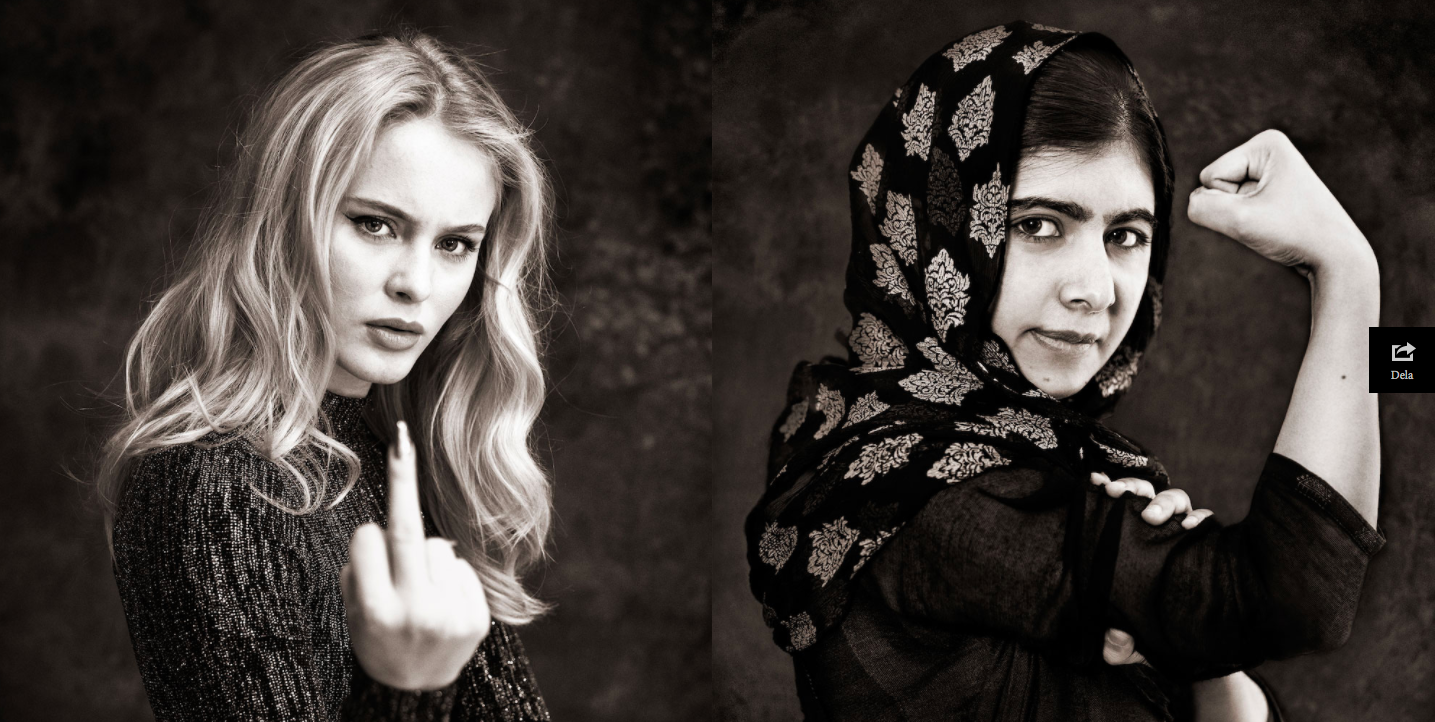
5ish years ago, I was photographed by Swedish photographer, Albert Wiking and interviewed by Oscar Edlund for a project they’ve been cooking for a long time. The project will finally see light next week and it’s called, ‘We Have A Dream’. It’s a photography exhibition of portraits of 114 people who dared to make a difference; the list includes Dalai lama, Chinese dissident artist Ai Weiwei, Malala Yousafzai, Timbuktu, Chimamanda Ngozi Adichie and I.

To be among those names blows my mind! I wish to fly right now to 7aret al Raqas, my humble neighbourhood in Sana’a and tell them the news. I hope my hard-working mother who survived an abusive marriage, and had a 5-year-long fight at courts to win divorce and custody of her two daughters, and worked 24/7 to put food on the table and get us a decent education; I hope my mom is proud of her daughter, moi. I wish my teacher in Sana’a who told me, ‘if you want to be a writer, you’ll die alone, unread and poor,’ know how wrong he was.

My dream is that all Yemenis live in dignity and peace, and along with that journey I dream to continue telling their stories.

‘We Have a Dream’ will be exhibited at Fotografiska in Stockholm, 9 Dec - 19 Feb 2017, and will be accompanied by a book of the same name.


Sunday, 10 April 2016

The Problem of Yemen Experts


Local voices are under-represented in favour of a new market of Western experts.


*Mohammed Al-Yamani, the dedicated Yemeni photojournalist who was killed after being shot by a Houthi sniper more than a week ago, has received a wide solidarity online exceeding his usual humble local network in Yemen; as his death came in a tragic incident. The New York Times has even reported his death. Hadn’t Al-Yamani – like most other killed Yemeni media workers – been murdered, the likelihood that his name would appear in big media publication would have been slim, if not impossible.

Tainted by evident under-representation of local Yemen experts, media outlets in all forms and directions, as well esteemed international panels and research centres, cover and analyse Yemen through the lens of predominantly non-Yemeni experts on Yemen. This undermines the importance of local Yemeni’s agency in shaping the narrative related to their country in international media.


“Study up” Yemen

It is crucial to differentiate between two types of foreign Yemen experts: those who have never been to Yemen and yet like to study and analyse Yemen as a mere subject-matter, and those who have been to Yemen for months or years and decide to make Yemen their speciality. Certainly, the former is more problematic than the latter. But they both contribute to the under-representation of the local Yemeni experts.

In the second oldest magazine in the United States, Harper's Magazine, a contributing editor wrote: “face it, until recently many of you didn’t know for sure if Yemen was a country or an erectile dysfunction medication. Now that Yemen has emerged as a major focus of the war on terror, you better study up.”

I see how Yemen can be regarded as a baffling case that needs to be “studied up”. This reflects why foreign Yemen experts are on demand. As an expert, he or she is expected to deliver the truth about this ‘mysterious’ country. Nevertheless, many Yemeni local journalists and writers who are unable to reach international audiences due to the language barrier or other economic reasons have often been recognised by the world only when they became attacked or killed in tragic circumstances. The agency that materialises in their work is denied when they are only represented in the event of a tragedy.

The fame that non-Yemeni experts gain feeds on the devaluation of Yemeni experts’ work and their exclusively tragic framing and representation. In fact, with every Yemeni journalist unnoticed or killed, a local perspective that could have tremendously challenged simplistic foreign perspectives is lost.

Some critics would denounce that and say instead that objectivity would be undermined if local Yemenis speak on the developments in Yemen, as the never-ending conflict in the country has created an extremely polarised environment. This overlooks the fact that, like any other expert or journalist, local Yemeni experts have publications and records that can stand as proof of their objectivity or lack thereof.


It is important that Yemenis claim how Yemen stories are ought to be told and framed because that won’t only enhance their representation in the media, but it might also transform all misinformation and confusion related to Yemen. The topics they focus on, the language they use, and the analysis they provide would be unique, organic, and original. Needless to say, the benefits of encouraging more female Yemeni local experts could provide better inclusive reporting on Yemen’s diverse issues.

More platforms for Yemeni experts

After more than 8 years of experience in covering Yemen, I notice the growing number of Yemeni journalists who work hard to report on what’s happening in their country. Acknowledging that some of them lack the needed skills or knowledge to excel in their work, as the country has been ravaged by sequel of devastating conflicts, I still see great potentials.

Yemeni journalists only need space and platform to develop; be it more opportunities for training or taking on media jobs. Additionally, the more international mainstream media and platforms depend on non-Yemeni experts on Yemen, the more they undermine the great potentials in aspiring Yemeni journalists.

It is time for western media outlets to stop promoting that only confusion and misinformation come out of Yemen and work more responsibly and sensibly on finding and offering spaces to diligent local voices.

________________________________________________
*This op-ed was originally published on The New Arab, 29 March 2016.