Showing posts with label Aden. Show all posts

Thursday, 1 February 2018

Ten People to Follow in Aden


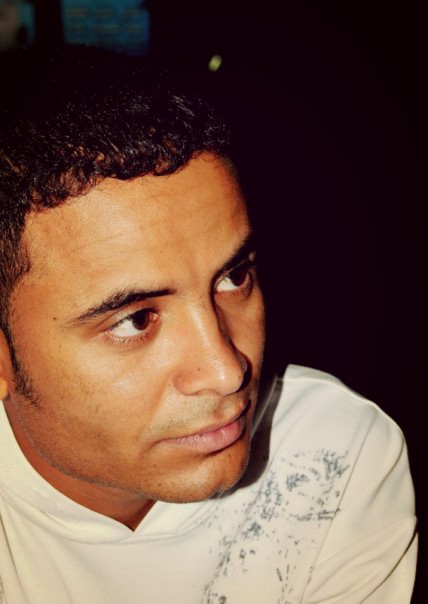
(c) Amr Gamal, Aden.

Aden has been witnessing dramatic events over the past few days with the situation changing by the hour. Yemen has always been a complicated story. For me, Yemen is only a complicated story because to a large extent media outlets, regionally and internationally, exert no effort to include reliable and relevant Yemeni voices in their reports. Social media is to be thanked for opening a new channel and for providing the space for Yemeni voices to narrate what's happening on the ground from their own local perspective.


A few years ago, I developed a list of Top 20 people to follow in Yemen. Things have since changed. Tweeps come and go. Some deactivate. Some change careers. Some remain active and constantly improve. But as all eyes are on Aden these days, we need a new special list on Aden coverage. The following accounts will bring Aden closer to you, as they have done for me.


There is no specific standard for coming up with this list - except that the people behind these accounts reside in Aden at the moment, bringing a meaningful take on events there.

So, here we go!


1. Osan @OsanBoairan  

I've been following Osan since Yemen's 2011 uprising. He's my top source for anything happening in Aden. His tweets are mainly commentary on the political developments with a large dose of cynicism. Commentary on regional events, both political and cultural are not exempt from Osan's timeline. He could be tweeting on serious political topics and next day tweet on, say, Egyptian celebrities' news. He tweets often about his family and beautiful daughters. And that's what I love about following him - he mixes it up and never bores me.

While working as an accountant, he blogs and tweets regularly during his free time. He only writes in Arabic and sometimes curses, which adds some color to his tweets.

His political stance is pro-Hirak but he's never that extremist or aggressive in expressing his political opinions.


2. Fathi Ben Lazrq @fathibnlazrq + @adenalghad  

Journalist and editor-in-chief of 'Aden Alghad' (Aden Tomorrow) news website, Fathi never distances himself from any story happening in Aden. While his newspaper covers Aden news extensively, he also makes sure to use his own Twitter account to update his followers on his take on events in Aden.

Fathi's political affiliation has not been clear or consistent over the years but that's totally understood given the great pressure and control he works under in Aden, as press freedom is almost zero. Fathi has received death threats several times, according to him unapologetically writing about them on twitter and facebook.


3. Nisma Mansour @NismaAlozebi   

The engineering student, Nisam came to prominence on Yemen-Twitter-community during the battle for Aden in March 2015 when fighting in the city began as Houthi and Saleh forces captured Aden International Airport.

Ever since I've been following Nisma's tweets that I find to be insightful and speak loads about the human side of political developments.

Her blog also reveals aspects of Aden that we don't usually hear about in the mainstream media. Nisma blogs and tweets in English but, sadly, she's not as active as one would like her to be. But we can also find her on Facebook.


4. Saleh al-Obaidi @mrsaleh20001  


Saleh is a photojournalist working with different media outlets. I have never conversed with him, so my comments here are only based on my observations. I've been following Saleh for a couple of years and I admire his passion for documenting how the Hirak's protests and events in Aden are developing.


His tweets and facebook posts are mainly visual; videos and photos - but it's clear he's deeply involved with the Hirak movement. He has been on the front lines of the battlefield taking telling photos which earned him serious injuries last year. After being hospitalized both in Aden and then in UAE, he recovered well and continues to work with his camera.


5. Huda al-Sarari @alsarare2013  


Huda is a hard-core human rights defender. I admire Huda so much that I wrote a long feature on her work, which you can read here on Middle East Eye. Huda tweets in Arabic and she focuses mainly on human rights issues in the city. 

I admire her impartiality, despite the very polarized environment she works in. You can find her on Facebook here.


6. Nashwan Al-Othmani @nalothmani  


Working as Radio Monte Carlo's Yemen correspondent, Nashwan's tweets are mainly about Aden news. His timeline shows reliable updates on developments on the ground. He often publishes posts on Facebook, reflecting on major events.


7. Amr Gamal @_AmrGamal  


Playwright and photographer, Amr Gamal could tweet about anything outside of politics. Despite how Aden is saturated by politics, Amr has managed to keep himself focused on the Arts, Theater, Cinema and Photography. 

His work archive has few plays written and directed by him for both local and international audiences in Yemen and Germany. I am lucky to call him a friend. Make sure to check his Facebook updates too.


8. Ahmed Shihab al-Qadi @ahmedalqadi001  


An engineering student who finds photography a hobby and a means of expressing his political opinions. Ahmed's camera is always with him as he participates in every protest and political event for the Hirak movement in Aden. 

He captures beautiful photos and I've always used his photos on my blog ever since I discovered him through Amr Gamal's suggestions to me. He's not super active on Twitter but he is definitely so on Facebook.


9. Vlogger Mazen al-Saqaf  


Mazen vlogs from Aden. Yes, that's right. He vlogs on social and cultural topics. His videos are interesting, funny and super local - meaning he's so chilled and not changing his Yemeni accent so "the other" could understand him. 

I love his simplicity and non-pretentious writing. His channel is in Arabic and you can find it here.


10. Ahmed Abdulaziz @_ahmedaziz  


Ahmed is a poet, I assume, but he's definitely a photographer capturing moments in Aden that your TV or newspaper won't show you. He has a unique style and his photos are about small details in Aden. Sadly, he's not active on Facebook or Twitter but he is active on Instagram.


Wednesday, 17 January 2018

Hisham is free, but Yemen's 'disappeared' crisis continues


A Yemeni protester calls for the release of detainees held in a Sanaa prison [AFP].


The words of Martin Luther King, "Free, at last," come into their own, as one Yemen's top social media activists, Hisham al-Omeisy, 38, walks free from a Houthi jail in Sanaa, after five month's detention. 

The Houthis did not officially charge him, or allow him access to a lawyer or to his family. His arrest, however, was likely linked to his job at the US embassy in Sanaa. Hisham's case was so sensitive, that we - his friends - couldn't and still can't reveal much of our conversations with his family in Sanaa, without risking their safety.

Hisham doesn't need an introduction.

If you are on Twitter and following news on Yemen, you almost certainly follow Hisham.

Hisham's case attracted widespread attention from human rights groups, and local and international media, because of the significance of his online activism. He has been one of the few top English-speaking commentators inside the country providing almost daily updates on events in Sanaa for his followers and the #Yemen Twitter audience.

As war-torn Yemen faces a dearth of happy news, the Yemen Twitter community celebrated photos this week of Hisham hugging his children for the first time since his detention in August.


But as we celebrate Hisham's release, it must also serve as a reminder of Yemen's "disappeared crisis"; the thousands of forcibly disappeared young men across the country, who don't enjoy Hisham's high media profile, and whose names and faces we don't hear about.

With some 12,000 arrests and more than 3,000 men forcibly disappeared, mothers, sisters and daughters of these abducted men began showing up in front of the central prison or police stations across major Yemeni cities, searching for their kidnapped sons, fathers, brothers and other male relatives. They started to organise and formed a collective named, "Mothers of Abductees Association".

The Association works as a pressure-group, raising awareness of the missing men, and advocating for their release.

The collective's spokesperson told me in a phone interview that many young men are forcibly disappeared for their political activities, and some for no reason at all.

In many cases, the mothers have no information or access to their imprisoned relatives - only if they are lucky they might receive some information. The imprisoned young men are held in terrible conditions and exposed to severe torture.

Dozens have been killed under torture, or have to endure a lasting disability from their wounds. Some parents even risk assault if they question Houthi authorities. In this incident, a young forcibly disappeared man's father was assaulted and beaten to death in front of the prison when he went searching for his son.

Journalists face disappearance because of their work, as affirmed by the recently freed Yousef Al-Ajlan who was released from a Houthis prison in Sanaa after a year-long detention.

The Committee to Protect Journalists notes that, "if the Houthis were considered a governing authority, Yemen would have the fifth highest number of journalists in jail in the world".

As the Houthis took over the capital, Sanaa in September 2014, and started a crackdown the press, Yousef wanted to avoid trouble, so he quit journalism and took a taxi driver job instead.

Still, in October 2016, armed men kidnapped Yousef as he was in his taxi in front of his house. During his detention, he was severely tortured and threatened with rape, and barred from seeing his family for months.

During this time, Yousef was transferred to several prisons and saw dozens of other detained journalists, accused of the same charges; "working for the enemy (Saudi Arabia) as a journalist". After a year, Yousef was finally freed in November, thanks to a prisoners of war exchange deal between Houthi and anti-Houthi tribes.

The death of Ali Abdullah Saleh and the semi-collapse of his political party, the General Public Congress (GPC) have allowed the Houthis to target many of Saleh's supporters.

My family and friends in Sanaa told me of men being dragged out of cars or public transport at checkpoints, and being interrogated about links to the GPC. Later, they are detained and then vanish. The local press reports Houthi executions and the assassination of Saleh's loyalists.

In Aden, the disappearances crisis is no different from in Sanaa. Mothers and daughters of kidnapped men regularly hold sit-in demonstrations calling for information about their relatives' whereabouts and release.

Hisham's case typifies Yemen's disappearance crisis.

But amid the unspeakable human suffering in Yemen, the disappearances crisis lacks attention, let alone an effective investigation. Locally, the climate of fear is on the rise and international human rights groups lack constant and full access to Yemen.

Nonetheless, increased pressure and domestic and international condemnation are needed until all of Yemen's disappeared people are found, and freed.

______________________________________________________
*This article was originally written for and published in The New Arab, today. 

Wednesday, 23 August 2017

Yemeni woman activist refuses to give up following death threats


A demonstration in Aden demanding "Justice for the prisoners and justice for the innocent"
with pictures of those detained held up (Image courtesy of Huda al-Sarari)

*Human rights lawyer Huda al-Sarari says she fears for her life after denouncing torture in secret prisons in Aden.


Huda al-Sarari was called a liar, a mercenary and even a “whore” on social media, during a vicious online campaign against the Yemeni human rights lawyer. Her ordeal began in June after she spoke out against torture in secret prisons allegedly run by the United Arab Emirates in Aden.

Sarari, who documented the abuses during an investigation and spoke about it to the media, said that her phone was stolen from her home, her car was attacked and she received death threats following the campaign. “I was afraid to leave my house or speak to media for more than a month,” Sarari told Middle East Eye. “But now, I want the word out, at least, about the dreadful experience [human rights activists have to] bear."

The defamation campaign against Sarari started in June on social media, after Human Rights Watch and the Associated Press published two separate investigations accusing the UAE of running secret prisons in Yemen, where many people were reportedly tortured and abused. She is one of the rights lawyers who documented the testimonies of torture victims held in the secret prisons and delivered them to HRW. She also gave interviews regarding her findings on several prominent media outlets after the reports came out.

HRW documented the cases of 49 people, including four children, who were arbitrarily detained or forcibly disappeared in the Aden and Hadramawt governates over the last year. At least 38 appear to have been arrested or detained by UAE-backed security forces. Multiple sources, including Yemeni government officials, have reported the existence of a number of informal detention centers and prisons in Aden and Hadramawt, including at least two run by the UAE and others run by UAE-backed Yemeni security forces.

The UAE Foreign Ministry denied running any secret prisons in Yemen and called the accusations "an attempt to sully the reputation of the alliance that had intervened to save the Yemeni people". The UAE is a key member of the Saudi-led and US-backed military campaign to support Yemen’s toppled government against Shia Houthi rebels, which was launched in March 2015. 


A protest in Aden demanding rights for prisoners (courtesy of Huda al-Sarari)

According to a draft United Nations report seen by Reuters on Thursday, the Saudi-led military coalition was responsible for an "unacceptably high" 51 percent of child deaths and injuries in Yemen last year. In January, the UN said that since the Saudi-led coalition intervened in 2015, the death toll has risen to at least 10,000 civilians.

One of the posts attacking Sarari stated that “the so-called Huda al-Sarari works in disguise with human rights groups, while she actually reports to political and security foreign parties, jeopardising [the] South’s interests and its goal for liberation." The Emergency Committee for Civil Society Organisations in Aden condemned the acts of defamation against Sarari and her family in a statement which spread on social media following the smear campaign. “The objective of this [campaign] is to reduce any efforts to defend human rights,” the statement said.

One day after the online attacks started on 23 June, Sarari and her family said they began to receive death threats. Sarari said that her phone was stolen from inside her home in Aden. Nothing else was taken from her house. The same day, her car windows were smashed. She added that her internet connection at home was deliberately cut off by an unknown person. Shortly after that, an acquaintance paid her a visit at her office to deliver her a "message" telling her that she should "be careful of your coming steps, otherwise you will risk your life", according to Sarari.


Family targeted

Sarari graduated in Sharia and Law from Aden University in 2011. She also holds a master's degree in Women's Studies and Development from the Women's Centre at Aden University.

She has been working in human rights activism for almost 10 years, gaining experience at numerous local organisations such as the Yemeni Women's Union, the Adala Foundation for Rights and Freedoms and the National Committee to Investigate Allegations of Human Rights Violations. She has also volunteered to work with Amnesty International and HRW.

With this experience, Sarari is accustomed to criticism. But this latest attack was something she has never experienced before. Sarari was disturbed by the posts, which she said were very personal and attacked her husband and children while identifying where they lived and even the car she drove. Her family was terrified when the social media campaign gained momentum. Huda’s mother, who preferred not to disclose her name, told MEE that, “if Huda is not fearful for her life, she must be fearful for the safety of her children," she said. "And because Huda is a woman, they go after her honour and this is unacceptable in our society.”


Sarari agrees that the worst part of the campaign launched against her is the libel and slander, which could bring shame to her whole family in the conservative society of Yemen. “As you may know, Yemen is a conservative society, in which women’s honour is perceived as sacred,” Sarari said. “Calling me degrading words like a whore has a stronger negative impact on me than it does if it were directed against a male activist.”

But others have also come to her defence. One Facebook post stated: "She said a word of truth against injustice, while you cheer for injustice, you who defame her honour should get whipped as a punishment according to our Sharia - that’s if there is any sharia in our land."

Human rights lawyer Huda al-Sarari working at the headquarters of the Yemeni Women's
Union in Aden (Photo courtesy of Huda al-Sarari)


"Quit your activism"

According to the HRW report, the court system in Aden is largely not functioning because of the war. Although the prosecutor’s office continues to issue release orders for people, these orders are ignored by security forces controlling the area. As a result, Sarari has found it futile to report threats against her to the prosecution and seek protection. "There is no chance to report threats today to the attorney general like we used to before, as it has been out of commission, impacted by the general instability," she said.

Aden is under the control of the Security Belt, a southern force taking part in the war. According to the HRW report issued in June, the "Security Belt" forces, are backed by the UAE. They have been accused of many abuses including excessive force during arrests and raids, detaining children, causing forcible disappearances and detaining family members of wanted suspects to pressure them to “voluntarily” turn themselves in, according to HRW. Sarari avoided approaching the "Security Belt" forces, given their links to the UAE. Instead, she contacted influential Yemeni political leaders.

"They couldn’t promise me much protection,” Sarari laughs and continues: “One [political leader] literally told me, 'how about you quit your activism and avoid facing risks?'”  For now, Sarari is taking basic safety measures such as limiting her movement, especially at night.

Kristine Beckerle, Yemen and UAE researcher at HRW told MEE: “Female activists like Huda al-Sarari are fighting every day for more rights protections, yet instead of addressing the important issues these [activists] are rising, many instead have faced smear campaigns, death threats, or a myriad of other challenges." "This is not only incredibly unfair to, and often very dangerous for, the women and men who have dedicated their lives to pushing for a more justice-oriented Yemen, but damaging to any future hope for a stable, rights-respecting state," she added.


According to local reports, there have been other instances where female activists have been subjected to similar online campaigns, like Radhya al-Mutawakel, who heads Mwatana, a human rights group based in Sanaa. In March, she was one of the speakers who addressed human rights violations in Yemen at the Dirksen Senate Office Building in Washington. She said that all parties in Yemen were committing human rights violations including the Houthi rebel group and the Saudi-led coalition.

The Yemeni embassy in Washington sent a letter trying to discourage congressional aides from attending the briefing in Washington. The embassy accused local speakers, including al-Mutawakel, of having a political “agenda” tied to Houthi rebels fighting against the government of President Abdu Rabbuh Mansour Hadi. The claim was denied by the event's organisers. Sarari said it was up to the main parties in the war, including the Yemeni government and the UAE, to restrain the armed groups and protect rights workers, especially women.

“I wish I had better advice for women activists in terms of how to protect themselves or could give clear answers on what human rights organisations could do to protect them," said Beckerle , "but, it really comes down to the authorities - to the Yemeni government and other actors like the UAE exercising influence over armed groups and fighting forces in Aden to be doing far more to ensure that there is space for men and women to speak out, advocate and do the work crucial to Yemen’s future."


'They depend on me'
Even though Sarari admits to being scared, she is determined to continue her work and has never considered quitting. Although it has been a difficult time for them, her family and husband offer their unconditional support and simply ask that she is careful. Part of Sarari’s many commitments are her assignments within the legal team of the Yemeni Women's Union. Its work includes offering legal protection for women in personal status cases and protecting the rights of female prisoners.

“Working with these women is like a driving force for me,” Sarari concluded. “Many abused women’s cases depend on me, so I have to ignore the threats and get up again and continue working.”

_____________________________________________________________
*My latest article published at Middle East Eye, on 21st of August.

Tuesday, 23 May 2017

The Gulf will control Yemen forever if the south secedes now


*Recent dramatic events in southern Yemen mirror the vicious circle in which the country finds itself, two years into a war that has killed at least 10,000 – and reflect a struggle between President Abd Rabbuh Mansour Hadi and his Emirati and Saudi backers.

In late April, after major tensions with the Emirati who have been backing him, Hadi dismissed two southern secessionists - Aidarus al-Zubaidi, the governor of Aden, and cabinet minister Hani bin Braik. In response, tens of thousands of people protested in Aden in early May and the southern seccessionist movement suddenly saw an opening for the prospect for independence in the middle of war.


On 11 May, Zubaidi announced that he and other officials were forming an autonomous body – the Southern Political Council – to manage Yemen’s southern provinces and represent the south domestically and internationally. Southerners have been campaigning for independence for years. Their grievances stem from the 1990s when North and South Yemen unified and then fought one another in a civil war in 1994.

After the war, the southerners accused the unified Yemeni government, based in the northern city of Sanaa, of corruption, election fraud and seizing their oil and gas-rich land. In 2007, they formally organised into the Southern Movement – known as Hirak - to secede. But the establishment of the new council and even the protests that have followed are unlikely to bring the secession which many southerners have long envisioned. Trying to secede right now is like trying to build a house in a hurricane.


Losing face

The southerners’ move is especially ill-timed given how weak their movement has grown and how its political context has changed since its founding. Following Yemen’s 2011 uprising, there has been a violent crackdown against Hirak leaders, including several assassinations which have further undermined the movement’s political wing.

The remaining Hirak leaders now either live outside the country, with many residing in Gulf countries, the UK and the US, and/or are affiliated with the Emirates. Given Hadi’s spat with Bin Zayed and Zubaidi’s announcement, it’s also clear that the movement is heavily influenced today by what the Saudis and the Emirates want. As ousted Yemeni president Ali Abdullah Saleh said earlier this month, “Events in Aden are only a play and the decision is in the hands of Saudi King Salman bin Abdulaziz al-Saud."

But do Gulf countries want this influence? Earlier this month, the Gulf Cooperation Council (GCC) issued a statement opposing the formation of the Southern Political Council in Aden because secession is exactly what they do not want.

For the south to achieve statehood within a failing state would only make Gulf countries lose face. The GCC would never allow that to happen. The GCC went to war in Yemen to restore what it began after Yemen’s 2011 uprising with its political plan, known as "the GCC initiative" - which firmly rejected the division of Yemen - and it won’t cease its engagement in Yemen until its plan is achieved. With the changing dynamics of the war, a southern secession for the Hirak movement would mean only a split from the GCC initiative, not from a state, because, technically, the north no longer has a functioning government and the south has a remote government, operating out of Riyadh. 


The decisive factor
As a Yemeni seeing my country descend into a failed state, I believe that, if there is any concept of Yemen as a state, then it’s a state controlled by the GCC. So if the south plans to split, it should rethink who is actually in control of Yemen’s sovereignty today. The Yemen war has drastically changed the rules of the game. Hirak’s rivalry has changed its face. Southerners used to face enforced control by the north, but now it’s control by their neighbours.

Some believe that because the international community doesn’t support the Hirak, it is doomed to fail, but I disagree. In fact, the fate of Hirak depends on the approval or disapproval by the GCC. History has taught us Yemenis that Yemen is the backyard of Gulf countries and it will always be under their control. Southern activists whom I recently spoke with on the condition of their anonymity affirmed their belief that secession would be realised, especially with the support of neighbouring countries.

One secessionist activist told me, “Despite all the flaws, the formation of the council is one step towards the right direction. We are working on convincing the Saudis and the Emirates, especially that UAE has always been more understanding to our case.” Before the war and even before the 2011 uprising, southern grievances were clearly identifiable and unique. Today, the grievances are much broader and sit in an entirely different context: a country torn by war, with thousands killed and injured, with crippled institutions and ravaged by a catastrophic humanitarian crisis.

As much as secessionists desire statehood, how the war proceeds and whether their breakaway would ever actually happen is entirely up to the regional states now involved.

_________________________________________________________
*This article was first published in MiddleEastEye.com on the 22nd of May, 2017.
*Photography courtesy: Ahmed Shihab Al-Qadi, in Aden, taken 21st of May, 2017. 

Thursday, 18 May 2017

Words with High Price

UPDATE May 27, 2017:

"Today I spoke like 30 good min with هاني الجنيد Hani Aljunid {check post below} on the phone. I would have liked to publish a long piece on his talk to me about who arrested/released him, how he was tortured & where is he hiding now but it will all risk his life.

All we can say now is that the danger is still on, but Hani appreciates all the solidarity he got. The noise you guys make, truly, makes a big difference. At least in Hani's case. Very unfortunately, today 3 Yemeni journalists were killed in Taiz by Houthis' bullets & no noise could save their lives. Nor these journalists' names will get the headlines, no hashtags for their names will trend worldwide. No nothing for Taiz or Yemeni journalists at the battlefield covering atrocities. Nothing. Just like that, another death in Yemen & another loss for local Yemeni voices speaking up for the butchered ones. And We can't afford to lose Hani. Hani still needs your solidarity like Yemen does. For the truth & humanity. For the love of love."
_______________________________________________________________

His name is Hani Aljunid. He’s for many one of Yemen’s best journalists, who has so much integrity. But for me, he’s the second most important person I have in Yemen after my family. I call him, comrade and he does so too. Did I mention that he’s also an active member at the socialist political party in Yemen? Well, he is, and still many don’t find any problem with his journalism and his political affiliation, except powerful corrupt politicians, corrupt businessmen, Al Qaeda and ISIS members.


Hani has only his words against all this evil. And that evil, embodied by some extremists arrested Hani along two other journalists, Majed al-Shoa’aibi and Hossam Radman on Tuesday, 16 May. The arrest was at the funeral of Amjed Mohammed, a social activist who was gunned down at an internet cafe in Aden, 2 days before Hani’s arrest. Basically, Amjed was a victim of unlawful killing, which seems to be the new norm in Aden under Saudi Arabia’s president Hadi rule. Hani and the other two journalists went to the funeral and were arrested, tortured and released. It’s still not clear who’s behind the arrest but several FB posts by siblings of Hani, Majed and Hossam say that they all were arrested on blasphemy charges.

Hani, known to be super active in posting on FB, he has not written a word yet. His brother wrote that Hani refuses to say anything for now and he was transferred to the hands of the Saudi-led coalition's forces. No updates so far on Hani’s situation.

It makes me sick thinking what could be happening to Hani now. My comrade. I know Hani since Yemen’s 2011 uprising. Hani has always written & advocated for social justice, equal citizenship for all, anti-militarism and he was a great believer in Yemen’s 2011 uprising. In 2012, Hani was deliberately targeted and physically assaulted during Gen. Ali Muhsen’s rule of Sana’a University. When the Houthis stormed into Sana’a on September 2014, Hani was one of the main dissident voices against Houthis’ atrocities. He has received numberless death threats from pro-Houthi groups. Along the beginning of the Saudi-led airstrikes in Yemen, he had to flee to Taiz. Then, some armed groups in Taiz targeted him as he was also critical in his writings to these groups’ behaviour in the city. Again, following several death threats, Hani had to flee to Aden.

In 2012, Hani was deliberately 
targeted and physically assaulted
during Gen. Ali Muhsen’s rule of 
Sana’a University. 


Throughout all these events, I kept a very close touch with Hani. I used to tell him, ‘don’t get killed, comrade!’ ‘I won’t let them kill me. I need to see you first, comrade!” Hani’s answer. The harshest calls were when I used to call Hani and he would tell me how he was surviving his day by having only one meal. Hani was financially struggling, like everything in the country. Though Hani had to pay a huge price for his writings but he thinks it’s nothing comparing to what his comrades had to sacrifice with. Several of his friends were killed in protests or/and deliberately targeted.


I can’t pretend to be strong at this moment. I can only pray for Hani and Yemen.

Sunday, 18 December 2016

Another Aden Bombing

A black day in Aden! The city mourned nearly 40 killed people today after a horrifying suicide bomber attack earlier today. North is ravaged by Saudi-led coalition air strikes & south is ravaged by terrorism. If anything still unifies the two regions, it is pain & violence. RIP!


Photos courtesy: Aden City

Sunday, 11 December 2016

Aden Bombing


Photo courtesy: Saleh al-Obaidi

ISIL claims the attack:


Heartbreaking. A man finds his son dead among the victims:


Monday, 5 December 2016

Love in War

photo courtesy: Saleh Al-Abadi


Spotted in Aden, Yemen. A guy wants his lover to come back, so he makes & hangs a poster in the street that reads, "Wala'a {his girl} I'm dying without you .. I love you.. will you marry me." 💕

Saturday, 3 December 2016

Fractured unions new and old: South Yemen independence day


Nov 30, 2016 - From the South Yemen Independence day celebration in Aden, Yemen. A soldier holding Yemen's Southern flag. Photo courtesy: Ahmed Shihab Al-qadi

*Today marks the 49th anniversary of South Yemen's independence from the British colony.

The anniversary should symbolise a time for rejoicing at the triumph over a colonial rule, but instead, it reflects the growing and contesting realities across Yemen.

Ever since the Southern Movement (Hirak) began in 2007, South Independence Day has become a time where the question of unity versus partition in the country manifests itself profoundly. The tension is all the more present given today's ongoing conflict.

Independence Day is of conflicting significance to the south and the north of Yemen, illustrating the rift between the two regions and the path towards partition the country finds itself on.

On one hand, as a continuation of the same spirit of liberty and the struggle for independence against the Brits, a great deal of the south takes the occasion to continue raising calls for independence from their latest virulent foe, the north; especially in the wake of Houthi takeover of the capital Sanaa in September, 2014.

One Adeni blogger writes, "after Ansar Allah's [the Houthis] coup against president Hadi's legitimacy, his detention and forcing him to resign, the southerners - even those who are pro-unity and were anti-secession - are totally convinced that people in the North don't believe in unity as they couldn't tolerate that a Southerner president [Hadi] would rule them.


Nov 30, 2016 - From the South Yemen Independence day celebration in Aden, Yemen. A man holding Yemen's Southern flag. Photo courtesy: Ahmed Shihab Al-qadi. 


With this magnified support for Hadi, and, as stated by the former colonel and founder of Hirak, and the Yemeni Retired Military Consultative Association, Nasser al-Noubi, "with this coup, unity was over".

Houthi brutality at the beginning of the war in Aden in the name of fighting Islamic State did not leave room for southerners to cling to unity, according to the Adeni blogger. As a result, the bloodshed of Houthis and of Saleh's forces in the South during the ongoing war caused the grievances of southerners to intensify, and demand secession from the "northern" government in Sanaa.

And on the other hand, in a delusional manner, in the north, ousted president Ali Abdullah Saleh and Houthi leaders are taking the opportunity this anniversary - particularly in light of the Saudi-led coalition strikes hitting the country - to mobilise northerners and southerners alike in standing united against the new "coloniser" (the Saudis) and fight back.

Over the two-year war, this is the second time Saleh has addressed the public, calling on them to cherish unity and fight united for victory against "the Saudis' aggression".

Ironically, South Independence Day for the North evokes the desire to win over the Saudis and it fails to evoke a reflection of the North's injustices against the South, at least in the course of the ongoing civil war. Certainly, independence means two totally different things for the North and the South in Yemen today.


Nov 30, 2016 - From the South Yemen Independence day celebration in Aden, Yemen. Photo courtesy: Saleh al-Obaidi

Fragile unity

Ever since the 1994 civil war in Yemen, the rift between the North and South has been growing ever deeper. Following the north's win over the south, the country has suffered from multifaceted local cleavages.

I remember as a child surviving the almost three-month long fight in Sanaa. In the following months and years, we were taught as part of the curriculum that the 1994 civil war was caused by the "secessionist" "infidels" giving a strong impression that the north was more concerned about unity and the south had perpetrated the betrayal.


Nov 30, 2016 - From the South Yemen Independence day celebration in Aden, Yemen. A poster reads, 'South Yemen Independence day. Thank you, Salman, thank you, Khalifa, thank you, the Arab coalition."
Photo courtesy: Saleh al-Obaidi

Fast forward to the present, and distrust between the north and the south is at its peak. To justify killing, and stripping them of their "Yemeniness", Houthi-Saleh militiamen have called the southerners IS supporters. Not only did this greatly undermine any sense of unity, but also any sense of a common national identity.

Despite the disappearances and the assassination of many Hirak activists, calls for secession or independence - depending on who you talk to - are still alive.

Unity versus Partition

When I talked with southern activists Rasha Jarhum and Khaled Al-Abbadi, I had a glimpse of their vision for the Hirak, one which has certainly been challenged by the ongoing war.

The fragmentation process is occurring across two dimensions: fighting on the ground, and in the political corridors of diplomacy. In today's conflict, the Hirak in Aden is in the hands of a coalition of separatist militia, jihadis and Salafists, orchestrating their secession.

Nov 30, 2016 - From the South Yemen Independence day celebration in Aden, Yemen.
Photo courtesy: Ahmed Shihab Al-qadi. 
Meanwhile, at the UN, Hirak activists are making concerted efforts to win the international community's support for their demands. However, southern activists are divided: some demand secession, regardless of ending Yemen's war, and others demand peace first for all Yemen, and then secession.

Nonetheless, the war may serve the Hirak's best interests, considering the latest development that saw Saleh and the Houthis form a cabinet two days ago. Following their formation of The Supreme Political Council and its announcement of a new government, the country is clearly falling under the control of two states.

This chaotic governance is a product of several factors: the stalemate in the battle for Sanaa, the failure of international actors to carry out peacemaking efforts in Yemen and the fact that none of the warring sides has made major gains.


Given the unwinnable nature of Yemen's war, these dynamics stress the growing complexity of not only unity in Yemen, but they also highlight the question of the form of peace war-torn Yemen desperately needs.

Nov 30, 2016 - From the South Yemen Independence day celebration in Aden, Yemen. Photo courtesy: Saleh al-Obaidi.

________________________________________
*This piece was first published on The New Arab, on the 30th November. 

Friday, 21 October 2016

Cinema in Yemen: 'Nothing is impossible'

*In a historic Oscars entry, movie by Yemeni director Khadija al-Salami will vie for best foreign language film award. 

*My latest piece published in Aljazeera English

Yemeni film director, Khadija al-Salami. Photo courtesy: L'Express.

For the first time in the country's history, Yemen has entered a film into the Academy Awards competition in the category of best foreign language film.

It was announced last week that the dramatic feature film, I Am Nojoom: Age 10 And Divorced, would be among 85 entries vying for the Oscar.

"I was happy to hear the news, even though I have no expectations whatsoever," director Khadija al-Salami told Al Jazeera over the phone from Canada, where she was promoting the film.

"It is a tough competition, but let's hope this news at least gives war-torn Yemen some positivity and encourages young Yemeni filmmakers to dream big."

Shot in 2013, prior to the ongoing war in Yemen, and released in 2014, I Am Nojoom is Salami's debut drama feature film. She has previously made 25 documentaries about Yemen, with a heavy focus on women's issues.

Salami both wrote and directed the film, inspired by her own personal experience of being forced into an arranged marriage at the age of 11 - which led her to attempt suicide, and ended in divorce - and by the story of Yemen's youngest divorcee, Nujood Ali.

'I Am Nojoom' film trailer. 

"My belief in the importance of empowering our women and enforcing a law that criminalises this practice is what drove me to do this film," said Salami, whose movie has so far earned 18 international awards.

"But mainly, it was important for me to tell a story based on a mix of my own story, Nujood's story and many other girls' stories suffering from this practice. And as I am touring around the world releasing the movie, my initial understanding of how child marriage is a global problem is increasingly being confirmed."

The latest official statistics suggest that more than 50 percent of Yemeni girls are married before the age of 18. There is no law in the country banning the practice - a problem that reaches far beyond Yemen's borders: "Globally, there are around 15 million female children being married every year," Salami noted. "The film speaks to many girls across the world." 


Ironically, I Am Nojoom is making global headlines at a time when Yemen's cinema scene has largely faded.

The country once boasted a vibrant cinematic culture, having gone through many phases since the early 1900s. In 1910, moviegoers in Yemen flocked to mobile cinema shows in Aden, and in the ensuing years, Bollywood films were widely exhibited in the city's cinema halls.

During the 1970s, the film scene gained strength, with around 50 cinema halls emerging in Aden, including Radio Cinema, Popular Cinema and Cinema Hurricane. In Sanaa, severalcinema halls showcased both Arab and Western films.

"In the mid '70s, north Yemen's late president, Ibrahim al-Hamdi, had a vision for the art scene to develop - part of his nation-building strategy," Yemeni art critic Ahlam Mohammed told Al Jazeera.


Yemen's cinematic scene peaked after the reunification of northern and southern Yemen in 1990. In the years that followed, several cinema halls opened in major cities, showing foreign and locally made films.

"Despite the early '90s being marked by several conflicts, the unification contributed [to] the film culture of both north and south Yemen in the coming years," Mohammed said, noting that Yemen's culture ministry provided support to local Yemeni filmmakers - particularly to those working on films with an "anti-terrorism" message.

But the growth did not last long. Economic problems bumped the film industry to the bottom of the government's priority list, while the rise of conservative forces further curbed cinematic growth.

"When we, the actors and filmmakers, sought the state's support, government officials used to state clearly that it was not the right time to support films, as they had more important issues to deal with," actor Adnan Alkhadher, a cast member in I Am Nojoom, told Al Jazeera. "We had terrible support in funding cinema, whether in the north or the south."

Amid this backdrop, the outbreak of Yemen's 2011 uprising offered a sign of hope for filmmakers.

Yemeni filmmaker, Sara Ishaq. Photo courtesy: Oscars. 

"The uprising represented a moment of courage for many Yemeni filmmakers and a time when their voices were validated, as Yemen received great attention during the Arab Spring," said Yemeni filmmaker Sara Ishaq. "I was and still am impressed by the rise of art and film in Yemen in the wake of the uprising."

Ishaq directed the first Yemeni film to be nominated for an Oscar, the documentary Karama Has No Walls (2012), which was set during the uprising.

Salami, meanwhile, says that she has made efforts to ensure that residents of war-torn Yemen would be able to see her film, arranging screenings in local forums and community centres.


I Am Nojoom has faced some criticism for portraying stereotypes about Yemen and "exploiting" the issue of child marriages in an effort to please a Western audience - accusations that Salami vehemently rejects.

"This debate is not only another reminder of why, until today, Yemen has no law against child marriage - but it also reflects the status of women's rights in Yemeni society," she said.

As she begins thinking about her next project - a love story that she hopes to shoot inside Yemen once the war comes to an end - Salami says that she is optimistic about the future.

"Nothing is impossible," she said. "If you put your heart into something, the sky is your limit."