Showing posts with label Yemeni woman journalists. Show all posts

Thursday, 6 July 2017

Caught Between Saudi Coalition and Houthi Rebels, Yemeni Journalists Face Challenges on All Sides

#FreeAbductedJournalists


Afef Abrougui from Global Voices published a lengthy report last week on the deteriorating bloody condition of Yemeni media and she interviewed me for the report last May for my take on the violations against Yemeni press following my analysis piece on the subject published by the Atlantic Council Centre published last May as well. The following is the Q&A interview I did with Afef :-


Afef Abrougui (AA): Reporters Without Borders describes the situation for journalists in Yemen as “disastrous”. Can you elaborate more on the types of violations journalists and media are facing in Yemen?

Me: The war has devastated almost every institution and sector in Yemen, including media group. However, in light of the war, journalists have been targeted deliberately and systematically because of their work. There is a massive violence against journalists by different armed groups; Houthis’ forces, Saleh’s forces and extremist groups like al Qaeda, ISIS and Salafis. The types of violations range between death threats, assassination attempts, unlawful killings, kidnappings, unlawful arrests, detentions without trials, forcibly disappearance, being used as civilian shields during armed fights, media offices being stormed in and forcefully shut down, new websites being blocked, among many other violations. The most shocking violation was the prosecution of a journalist and being sentenced to death.


AA: From the research that I have so far been doing online, it seems that Houthi rebels represent the main party responsible for these violations, what about the Saudi-led coalition? In addition to the airstrikes that killed journalists, have the coalition and those supporting Hadi been responsible for silencing journalists and media on the ground (at least in areas under their control)?

Me: Yes, both the Saudis and Hadi’s leadership share equally the reasons of why there is a blackout on Yemen war in media. As the war began in Yemen in early 2015, WikiLeaks released thousands of diplomatic cables from Saudi Arabia’s foreign ministry, which included documents showing how Saudi Arabia is buying media silence, Arabic media in specific. Plus, reports have shown how the Saudis are hiring PR companies to polish its image in media and "whitewash” its record on human rights; especially on KSA’s war crimes in Yemen. On the other hand, Hadi’s government have blocked several independent foreign journalists from accessing the country; as their reporting challenges Hadi’s folks’ narrative of the situation in Yemen.


AA: How do you think these attacks/violations are impacting coverage of the war in Yemen, a war that is already under-reported? How does this affect independent media?

Me: Media coverage of Yemen war has become like a battle zone; those who have the money and power manage to use media as a weapon of war in promoting their side of the story only and shaping how Yemen war appears on mainstream media. Each side in the war portraits only its “truth” while it’s totally incomplete picture of the situation. As a result, you find a great deal of war propaganda. No middle ground for any other type of media; local independent press suffers a great deal and it has collapsed. The only remaining Yemeni independent media are the Yemeni freelance journalists or citizen journalists who turned into social media disseminating updates on the situation in Yemen.


AA: What can international organisations that work to promote press and media freedoms do to support Yemeni journalists who are on the ground?

Me: It’s very important to give these journalists the attention while they are alive not when they are killed or arrested; meaning it’s important to reach out to journalists inside Yemen and find ways to meet their needs. Very often, a local Yemeni journalist who is covering the war inside the country would his name grab international media’s headlines when he’s sentenced to death or killed or etc. The attention that these local journalists could get while they are alive could really give them a sort of protection from such violations. More importantly, as Yemen’s economy is collapsing, it’s crucial to financially support these local journalists working on the ground. This could happen through mutual cooperation or allocating assignments for these journalists. In simple words, it’s crucial to support Yemeni journalists or media groups morally and financially.


AA: When Houthi rebels first took control of the capital, they resorted to blocking a number of news websites and blogs, do they still engage in such tactics? Have you recently heard about websites or blogs getting blocked in the country?

Me: Yes, they still use such tactics. Several new websites are blocked in Yemen; such as this one - as Hodeidah is under the Houthis’ control and the website is critical to their behaviour in the city. Blogs are not very popular in Yemen but Facebook represents the equivalent of blogs. There are Facebook celebrities in Yemen who are very active in posting on FB and are critical to the Houthis. These celebrities’ FB accounts have been hacked and sometimes more than once. It seems that’s the Houthis’ tactic to censor.

Saturday, 17 June 2017

My audio interview with Status Hour podcast

I had a long chat about my work and Yemen with the Status Hour podcast's journalist Mohamad-Ali Nayel, a couple months ago. Though, the interview was published earlier this month. Full audio interview is here.

Thursday, 18 May 2017

Words with High Price

UPDATE May 27, 2017:

"Today I spoke like 30 good min with هاني الجنيد Hani Aljunid {check post below} on the phone. I would have liked to publish a long piece on his talk to me about who arrested/released him, how he was tortured & where is he hiding now but it will all risk his life.

All we can say now is that the danger is still on, but Hani appreciates all the solidarity he got. The noise you guys make, truly, makes a big difference. At least in Hani's case. Very unfortunately, today 3 Yemeni journalists were killed in Taiz by Houthis' bullets & no noise could save their lives. Nor these journalists' names will get the headlines, no hashtags for their names will trend worldwide. No nothing for Taiz or Yemeni journalists at the battlefield covering atrocities. Nothing. Just like that, another death in Yemen & another loss for local Yemeni voices speaking up for the butchered ones. And We can't afford to lose Hani. Hani still needs your solidarity like Yemen does. For the truth & humanity. For the love of love."
_______________________________________________________________

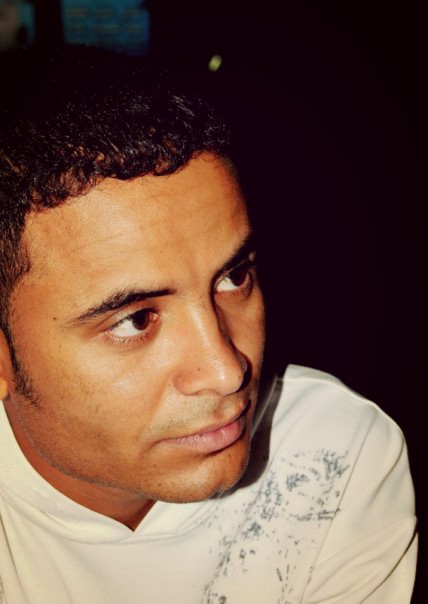
His name is Hani Aljunid. He’s for many one of Yemen’s best journalists, who has so much integrity. But for me, he’s the second most important person I have in Yemen after my family. I call him, comrade and he does so too. Did I mention that he’s also an active member at the socialist political party in Yemen? Well, he is, and still many don’t find any problem with his journalism and his political affiliation, except powerful corrupt politicians, corrupt businessmen, Al Qaeda and ISIS members.


Hani has only his words against all this evil. And that evil, embodied by some extremists arrested Hani along two other journalists, Majed al-Shoa’aibi and Hossam Radman on Tuesday, 16 May. The arrest was at the funeral of Amjed Mohammed, a social activist who was gunned down at an internet cafe in Aden, 2 days before Hani’s arrest. Basically, Amjed was a victim of unlawful killing, which seems to be the new norm in Aden under Saudi Arabia’s president Hadi rule. Hani and the other two journalists went to the funeral and were arrested, tortured and released. It’s still not clear who’s behind the arrest but several FB posts by siblings of Hani, Majed and Hossam say that they all were arrested on blasphemy charges.

Hani, known to be super active in posting on FB, he has not written a word yet. His brother wrote that Hani refuses to say anything for now and he was transferred to the hands of the Saudi-led coalition's forces. No updates so far on Hani’s situation.

It makes me sick thinking what could be happening to Hani now. My comrade. I know Hani since Yemen’s 2011 uprising. Hani has always written & advocated for social justice, equal citizenship for all, anti-militarism and he was a great believer in Yemen’s 2011 uprising. In 2012, Hani was deliberately targeted and physically assaulted during Gen. Ali Muhsen’s rule of Sana’a University. When the Houthis stormed into Sana’a on September 2014, Hani was one of the main dissident voices against Houthis’ atrocities. He has received numberless death threats from pro-Houthi groups. Along the beginning of the Saudi-led airstrikes in Yemen, he had to flee to Taiz. Then, some armed groups in Taiz targeted him as he was also critical in his writings to these groups’ behaviour in the city. Again, following several death threats, Hani had to flee to Aden.

In 2012, Hani was deliberately 
targeted and physically assaulted
during Gen. Ali Muhsen’s rule of 
Sana’a University. 


Throughout all these events, I kept a very close touch with Hani. I used to tell him, ‘don’t get killed, comrade!’ ‘I won’t let them kill me. I need to see you first, comrade!” Hani’s answer. The harshest calls were when I used to call Hani and he would tell me how he was surviving his day by having only one meal. Hani was financially struggling, like everything in the country. Though Hani had to pay a huge price for his writings but he thinks it’s nothing comparing to what his comrades had to sacrifice with. Several of his friends were killed in protests or/and deliberately targeted.


I can’t pretend to be strong at this moment. I can only pray for Hani and Yemen.

Monday, 5 December 2016

"As long as there are human beings there are stories"

Head of programme Jenny Wiik, students at MIJ and Afrah Nasser. Pictures and text: Kovuuri G. Reddy

*The media landscape is changing and re-shaping constantly with the internet in our midst. Internet is a platform for publishing and broadcasting not only for journalists but also for citizens (and netiznes). Because everyone is communicating online including the citizen journalists, the need for professional journalists has become acute and sought after. Sought especially by the independent and mainstream media in order to find and narrate stories that matter to the people in a compelling manner, and in the professional fashion that includes ethics and codes of conduct.


The first batch of students studying Master’s in Investigative Journalism(2016-2017) had completed the module ‘Investigative Journalism in Digital Environments’ and have started ‘Investigative Journalism Across Borders’ at the Department of Journalism, Media and Communication (JMG). On 2ndNovember they had a lecture and Q & A session with Afrah Nasser, Yemeni blogger and journalist.

Afrah Nasser is also a human rights activist and strives to report on unreported aspects of her home-country Yemen (the poorest Arab country in the Middle East, and almost unnoticed by the Western media except briefly during the Arab Spring, and now the Guardian reports 'US Military members could be prosecuted for war crimes in Yemen'). Before seeking refuge in Sweden, she worked as a journalist in Sana’a where she faced in-house censorships on political reporting.


In a 2-hour session, Afrah Nasser focused on how ‘citizen journalism is shaping professional journalism’ by mentioning to the student-journalists from her experiences on Twitter and blogging. She is an alumnus of JMG, and did a thesis under Jenny Wiik the course director of Master’s in Investigative Journalism. From her experiences as reporter in Yemen to working in Sweden as a journalist, she explained the role of political regimes in the Middle East by mentioning Bahrain, Oman, Qatar, Syria, Lebanon, Saudi Arabia and what the West can do, and cannot do for the betterment of civic and political freedoms.

In the era of ‘slow journalism’ and ‘fast journalism’ how to come to terms with finding a story and bringing it to the attention of audience?

‘Journalism is a literature in hurry’ and also there are platforms such as Twitter where not only words even ‘space between words and a punctuation mark count as a character’: the size of text or word count is becoming shorter and shorter, then how can one express a complex story in crisply condensed format? For Afrah Nasser, telling a story in few words and often in hurry is an art in itself. It is something that the journalists have to live with, and find ways for expressing.


Internet is bane and boon to the society. For Afrah, it is a boon because it is a platform for citizens in dictatorial regimes to report on censored subjects. She highlighted how internet’s social media websites have becomes source of news for journalists and for users to interact (like, dislike and comment). In spite of the rise in citizen journalism, she stressed that the professional journalists stand out from the crowds because they know (ought to know) the ethics, codes of practice of the craft: truth and accuracy (verification and validation), independence, fairness and impartiality, humanity and accountability. She advised the student-journalists to empower themselves by learning the professional codes and techniques of the craft as there are a range of tools (to record, film, photograph and publish and broadcast to bypass filters and censorships) at the disposal of journalists.


With my former MA' thesis supervisor, and the university lecturer, Jenny Wiik.

Everything starts with an idea: so is the case for investigative journalists, Afrah Nasser said. She said the students of Master’s in Investigative Journalism have the potential to make an impact with their stories not only in Sweden, in Nordic countries and in Europe but also in other parts of the world.

Irrespective of citizen journalism, and the infinite content produced on the internet, she said there is always a need for professional journalists: “I am always hopeful for the future when it comes to journalism because I think as long as we have human beings…they are vibrant, and living…there will always be stories to tell and it’s the role of the journalists to tell those stories.”

Photos & text by Kovuuri G. Reddy


__________________________________________________________
*This piece was written and published by Gothenburg Univeristy's Department of Journalism, Media and Communication, following my lecture to 'Investigative Journalism' MA program students.