Dec. 9th - I co-commented last Saturday on "media coverage and Yemen war" segment on The Listening Post program of Al Jazeera English.
Showing posts with label Yemeni media. Show all posts
Showing posts with label Yemeni media. Show all posts
Tuesday, 12 December 2017

Thursday, 6 July 2017
Caught Between Saudi Coalition and Houthi Rebels, Yemeni Journalists Face Challenges on All Sides
 |
| #FreeAbductedJournalists |
Afef Abrougui from Global Voices published a lengthy report last week on the deteriorating bloody condition of Yemeni media and she interviewed me for the report last May for my take on the violations against Yemeni press following my analysis piece on the subject published by the Atlantic Council Centre published last May as well. The following is the Q&A interview I did with Afef :-
Afef Abrougui (AA): Reporters Without Borders describes the situation for journalists in Yemen as “disastrous”. Can you elaborate more on the types of violations journalists and media are facing in Yemen?
Me: The war has devastated almost every institution and sector in Yemen, including media group. However, in light of the war, journalists have been targeted deliberately and systematically because of their work. There is a massive violence against journalists by different armed groups; Houthis’ forces, Saleh’s forces and extremist groups like al Qaeda, ISIS and Salafis. The types of violations range between death threats, assassination attempts, unlawful killings, kidnappings, unlawful arrests, detentions without trials, forcibly disappearance, being used as civilian shields during armed fights, media offices being stormed in and forcefully shut down, new websites being blocked, among many other violations. The most shocking violation was the prosecution of a journalist and being sentenced to death.
AA: From the research that I have so far been doing online, it seems that Houthi rebels represent the main party responsible for these violations, what about the Saudi-led coalition? In addition to the airstrikes that killed journalists, have the coalition and those supporting Hadi been responsible for silencing journalists and media on the ground (at least in areas under their control)?
Me: Yes, both the Saudis and Hadi’s leadership share equally the reasons of why there is a blackout on Yemen war in media. As the war began in Yemen in early 2015, WikiLeaks released thousands of diplomatic cables from Saudi Arabia’s foreign ministry, which included documents showing how Saudi Arabia is buying media silence, Arabic media in specific. Plus, reports have shown how the Saudis are hiring PR companies to polish its image in media and "whitewash” its record on human rights; especially on KSA’s war crimes in Yemen. On the other hand, Hadi’s government have blocked several independent foreign journalists from accessing the country; as their reporting challenges Hadi’s folks’ narrative of the situation in Yemen.
AA: How do you think these attacks/violations are impacting coverage of the war in Yemen, a war that is already under-reported? How does this affect independent media?
Me: Media coverage of Yemen war has become like a battle zone; those who have the money and power manage to use media as a weapon of war in promoting their side of the story only and shaping how Yemen war appears on mainstream media. Each side in the war portraits only its “truth” while it’s totally incomplete picture of the situation. As a result, you find a great deal of war propaganda. No middle ground for any other type of media; local independent press suffers a great deal and it has collapsed. The only remaining Yemeni independent media are the Yemeni freelance journalists or citizen journalists who turned into social media disseminating updates on the situation in Yemen.
AA: What can international organisations that work to promote press and media freedoms do to support Yemeni journalists who are on the ground?
Me: It’s very important to give these journalists the attention while they are alive not when they are killed or arrested; meaning it’s important to reach out to journalists inside Yemen and find ways to meet their needs. Very often, a local Yemeni journalist who is covering the war inside the country would his name grab international media’s headlines when he’s sentenced to death or killed or etc. The attention that these local journalists could get while they are alive could really give them a sort of protection from such violations. More importantly, as Yemen’s economy is collapsing, it’s crucial to financially support these local journalists working on the ground. This could happen through mutual cooperation or allocating assignments for these journalists. In simple words, it’s crucial to support Yemeni journalists or media groups morally and financially.
AA: When Houthi rebels first took control of the capital, they resorted to blocking a number of news websites and blogs, do they still engage in such tactics? Have you recently heard about websites or blogs getting blocked in the country?
Me: Yes, they still use such tactics. Several new websites are blocked in Yemen; such as this one - as Hodeidah is under the Houthis’ control and the website is critical to their behaviour in the city. Blogs are not very popular in Yemen but Facebook represents the equivalent of blogs. There are Facebook celebrities in Yemen who are very active in posting on FB and are critical to the Houthis. These celebrities’ FB accounts have been hacked and sometimes more than once. It seems that’s the Houthis’ tactic to censor.
Monday, 26 June 2017
In Audio, Yemen at the UN Human Rights Council
Last week, I participated in a side session on Yemen war and Public Freedoms; at UN Human Rights Council's 35th session in Geneva, the seminar was co-run by the Committee to Protect Journalists organisation and the Gulf Center for Human Rights and others. Other panellists were Yemeni Human Rights defender Radhya al-Mutawakel from Mwatan Organization and Sherif Mansour from CPJ. Full transcript can be found here. The following audio clips are the recording of my speech and Radhya's.
Thursday, 18 May 2017
Words with High Price
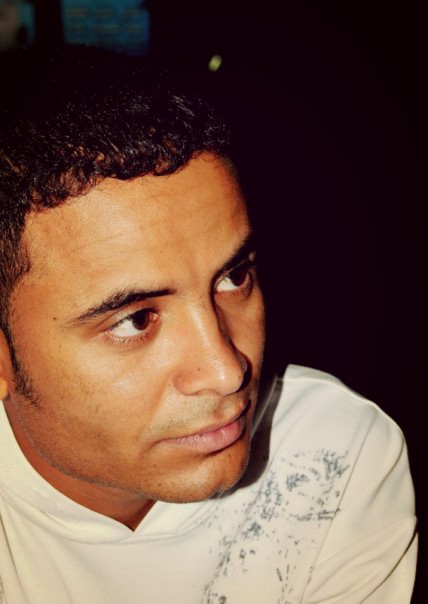
"Today I spoke like 30 good min with هاني الجنيد Hani Aljunid {check post below} on the phone. I would have liked to publish a long piece on his talk to me about who arrested/released him, how he was tortured & where is he hiding now but it will all risk his life.
All we can say now is that the danger is still on, but Hani appreciates all the solidarity he got. The noise you guys make, truly, makes a big difference. At least in Hani's case. Very unfortunately, today 3 Yemeni journalists were killed in Taiz by Houthis' bullets & no noise could save their lives. Nor these journalists' names will get the headlines, no hashtags for their names will trend worldwide. No nothing for Taiz or Yemeni journalists at the battlefield covering atrocities. Nothing. Just like that, another death in Yemen & another loss for local Yemeni voices speaking up for the butchered ones. And We can't afford to lose Hani. Hani still needs your solidarity like Yemen does. For the truth & humanity. For the love of love."
_______________________________________________________________
His name is Hani Aljunid. He’s for many one of Yemen’s best journalists, who has so much integrity. But for me, he’s the second most important person I have in Yemen after my family. I call him, comrade and he does so too. Did I mention that he’s also an active member at the socialist political party in Yemen? Well, he is, and still many don’t find any problem with his journalism and his political affiliation, except powerful corrupt politicians, corrupt businessmen, Al Qaeda and ISIS members.
Hani has only his words against all this evil. And that evil, embodied by some extremists arrested Hani along two other journalists, Majed al-Shoa’aibi and Hossam Radman on Tuesday, 16 May. The arrest was at the funeral of Amjed Mohammed, a social activist who was gunned down at an internet cafe in Aden, 2 days before Hani’s arrest. Basically, Amjed was a victim of unlawful killing, which seems to be the new norm in Aden under Saudi Arabia’s president Hadi rule. Hani and the other two journalists went to the funeral and were arrested, tortured and released. It’s still not clear who’s behind the arrest but several FB posts by siblings of Hani, Majed and Hossam say that they all were arrested on blasphemy charges.
Hani, known to be super active in posting on FB, he has not written a word yet. His brother wrote that Hani refuses to say anything for now and he was transferred to the hands of the Saudi-led coalition's forces. No updates so far on Hani’s situation.
It makes me sick thinking what could be happening to Hani now. My comrade. I know Hani since Yemen’s 2011 uprising. Hani has always written & advocated for social justice, equal citizenship for all, anti-militarism and he was a great believer in Yemen’s 2011 uprising. In 2012, Hani was deliberately targeted and physically assaulted during Gen. Ali Muhsen’s rule of Sana’a University. When the Houthis stormed into Sana’a on September 2014, Hani was one of the main dissident voices against Houthis’ atrocities. He has received numberless death threats from pro-Houthi groups. Along the beginning of the Saudi-led airstrikes in Yemen, he had to flee to Taiz. Then, some armed groups in Taiz targeted him as he was also critical in his writings to these groups’ behaviour in the city. Again, following several death threats, Hani had to flee to Aden.
 |
In 2012, Hani was deliberately targeted and physically assaulted during Gen. Ali Muhsen’s rule of Sana’a University. |
Throughout all these events, I kept a very close touch with Hani. I used to tell him, ‘don’t get killed, comrade!’ ‘I won’t let them kill me. I need to see you first, comrade!” Hani’s answer. The harshest calls were when I used to call Hani and he would tell me how he was surviving his day by having only one meal. Hani was financially struggling, like everything in the country. Though Hani had to pay a huge price for his writings but he thinks it’s nothing comparing to what his comrades had to sacrifice with. Several of his friends were killed in protests or/and deliberately targeted.
I can’t pretend to be strong at this moment. I can only pray for Hani and Yemen.
Friday, 5 May 2017
The Yemen War, Media, and Propaganda
 |
| #SaveYemeniJournalistss |
*Yemeni media is one of the most affected aspects in the raging war in Yemen. In an unprecedented case, a Houthi-controlled court issued a death sentence earlier in April, against journalist Yahya al-Joubayhy, for being a “Saudi spy,” reflecting a glimpse of the risks Yemeni media workers endure.
The war in Yemen has negatively impacted media in multiple-levels. In 2016, in a televised speech, the leader of Houthi rebels, Abdelmalek al-Houthi, warned “The media workers are more dangerous to our country than the nationalist and warring mercenaries,” shows the hostility of militant groups toward the media. This hostility hinders the media’s ability to deliver news and stories about Yemen’s war, leaving Yemeni news audiences ignorant, dependent on military groups’ own media, and easy prey to war propaganda.
War on the Media
Yemen’s media has suffered a decline and retreated as it comes under increased pressure during the ongoing conflict. According to Yemen’s National Information Center, before the Houthis’ takeover of Yemen’s capital city Sanaa in September 2014, Yemen used to enjoy about 295 publications, four official state-owned TV channels, and fourteen privately-owned TV channels. Despite this media landscape, Freedom House ranked Yemen’s freedom of the press status amongst the worst in the world, and it has since declined.
Controlling the local and international narrative is crucial for the Houthis. When Houthi forces took over Sanaa in 2014, they shelled the Yemen state TV station, and soon after they replaced media professionals with Houthi-affiliated media groups. While this was happening in Houthi-controlled areas, newspapers and broadcasts in the north and south were suspended, such as the formerly state-owned Althawra and 14October newspapers. Instead, the Houthi's captured Althawra and turned it into a pro-Houthi outlet circulated only in the north, and 14October had a similar experience under the southern coalition. In Houthi-controlled areas, there has been a crackdown on media groups, the Yemeni internet service provider, Yemennet, which has blocked certain anti-Houthi websites, and the Houthi-controlled Ministry of Information accused media outlets of “inciting treason.” Controlling the media became even more prevalent in 2015 after the Saudis started their air campaign.
Today, in Houthi-controlled areas, there are ten Houthi-owned print publications, two Houthi-owned TV channels and one TV channel owned by former president Ali Abdullah Saleh. In the south, a handful of TV channels and newspapers are currently working, the most notable are owned separately by Yemeni President Abd Rabbo Mansour Hadi and General Ali Mohsen al-Ahmar. There are also three independent media groups.
The deadliest violation against press in Yemen was the death of two Yemeni journalists who reportedly were used as human shields by Houthi forces to protect a military installation. In another instance, blogger and investigative journalist Mohammed al-Absi, known for reporting on a number of Houthi-related-corruption stories, was poisoned. While many believe Houthis are responsible, the investigation is still undergoing. The large-scale abuses against press in Yemen has not only made Yemen one of the most dangerous places to work as a journalist, but also has ranked the Houthis as the second worst abuser of press freedom in the world—only the Islamic State (ISIS, ISIL, Daesh) surpasses them.
Meanwhile, Hadi and his government have begun focusing on using social media as the sole tool for dissemination of information starting from the day he escaped Sanaa to Aden in February 2015. Hadi was able to escape with the help of former Information Minister Nadia al-Saqqaf, who was tweeting about his alleged ‘critical health’ under Houthi imposed siege. Other Yemeni officials are also ordered to join and be active on Twitter, according to a Yemeni official who prefers to remain anonymous for security reasons. Hadi’s leadership has given more focus on using the internet as means to disseminate information in a country where only a quarter of its population has access to the internet, which is mainly the elite. The exiled government seems more concerned about addressing the international community than Yemenis.
Yemen’s media has suffered a decline and retreated as it comes under increased pressure during the ongoing conflict. According to Yemen’s National Information Center, before the Houthis’ takeover of Yemen’s capital city Sanaa in September 2014, Yemen used to enjoy about 295 publications, four official state-owned TV channels, and fourteen privately-owned TV channels. Despite this media landscape, Freedom House ranked Yemen’s freedom of the press status amongst the worst in the world, and it has since declined.
Controlling the local and international narrative is crucial for the Houthis. When Houthi forces took over Sanaa in 2014, they shelled the Yemen state TV station, and soon after they replaced media professionals with Houthi-affiliated media groups. While this was happening in Houthi-controlled areas, newspapers and broadcasts in the north and south were suspended, such as the formerly state-owned Althawra and 14October newspapers. Instead, the Houthi's captured Althawra and turned it into a pro-Houthi outlet circulated only in the north, and 14October had a similar experience under the southern coalition. In Houthi-controlled areas, there has been a crackdown on media groups, the Yemeni internet service provider, Yemennet, which has blocked certain anti-Houthi websites, and the Houthi-controlled Ministry of Information accused media outlets of “inciting treason.” Controlling the media became even more prevalent in 2015 after the Saudis started their air campaign.
Today, in Houthi-controlled areas, there are ten Houthi-owned print publications, two Houthi-owned TV channels and one TV channel owned by former president Ali Abdullah Saleh. In the south, a handful of TV channels and newspapers are currently working, the most notable are owned separately by Yemeni President Abd Rabbo Mansour Hadi and General Ali Mohsen al-Ahmar. There are also three independent media groups.
The deadliest violation against press in Yemen was the death of two Yemeni journalists who reportedly were used as human shields by Houthi forces to protect a military installation. In another instance, blogger and investigative journalist Mohammed al-Absi, known for reporting on a number of Houthi-related-corruption stories, was poisoned. While many believe Houthis are responsible, the investigation is still undergoing. The large-scale abuses against press in Yemen has not only made Yemen one of the most dangerous places to work as a journalist, but also has ranked the Houthis as the second worst abuser of press freedom in the world—only the Islamic State (ISIS, ISIL, Daesh) surpasses them.
Meanwhile, Hadi and his government have begun focusing on using social media as the sole tool for dissemination of information starting from the day he escaped Sanaa to Aden in February 2015. Hadi was able to escape with the help of former Information Minister Nadia al-Saqqaf, who was tweeting about his alleged ‘critical health’ under Houthi imposed siege. Other Yemeni officials are also ordered to join and be active on Twitter, according to a Yemeni official who prefers to remain anonymous for security reasons. Hadi’s leadership has given more focus on using the internet as means to disseminate information in a country where only a quarter of its population has access to the internet, which is mainly the elite. The exiled government seems more concerned about addressing the international community than Yemenis.
Flawed Media Representation
As a result of the hindered and biased media landscape, both the international community and more particularly the Yemeni public receive a distorted picture of the Yemen war. This turmoil in the media landscape has undermined any relatively comprehensive media representation of the Yemen war. Each side of the media coverage focuses on its opponent’s atrocities, deliberately overlooking its own wrongdoings, to cast the other as the only perpetrator. More importantly, each side of the media may not necessarily instigate sectarianism, but it does instigate regionalism, antagonism, and violence by humanising one side and dehumanising the other. For instance, each side depicts the other as mercenaries for the Saudis or the Iranians, respectively, and depicts their dead as the only ones worthy of being called victims.
The polarized media outlets also characterize the beginning of the war differently. For pro-Houthi and Saleh media, it began when the Saudi-led coalition began its campaign, while for pro-exiled government media outlets, there is an emphasis on the Houthis’ coup d’etat. For Yemenis, it is impossible to get a full picture of the conflict. In the north, people not politically affiliated tend to gradually become Houthi supporters as most media outlets are affiliated with the Houthis, and vice versa in the south. As each understanding of the conflict becomes more biased, it becomes harder to reach national and local level reconciliation deals.
The international media, and specifically Arab media, coverage suffers from a different set of problems. A quick look at major news organizations shows a lack of coverage of Yemen in comparison to other global events, and rarely features Yemen articles in the headlines. There are three main reasons for this: first, Houthi forces either forcibly disappear or put behind bars non-propagandist Yemeni journalists; second, Saudi Arabia is buying media silence along with hiring PR companies to polish its image in media; and lastly, independent foreign journalists do not have access to the country.
Yemenis who are critical of both local coverage and international media find themselves disappointed and frustrated. Incomplete information coupled with frustration is something that armed groups, including the belligerent parties and extremist groups such as ISIS, prey on to attract recruits.
Most Yemeni journalists interviewed for this article expressed that they had no work because they had been forced to move back to their villages to escape the Houthi crackdown. One journalist pointed out that, “polarization in Yemeni media has never been this high. The problem is that there is no room for a middle ground. On one hand, Houthis allow press only if it is biased in favor of them, as does the Yemeni exiled-government. All that you have in Yemen now is propaganda and each side can support you, only if you abide by their propaganda.”
As a result of the hindered and biased media landscape, both the international community and more particularly the Yemeni public receive a distorted picture of the Yemen war. This turmoil in the media landscape has undermined any relatively comprehensive media representation of the Yemen war. Each side of the media coverage focuses on its opponent’s atrocities, deliberately overlooking its own wrongdoings, to cast the other as the only perpetrator. More importantly, each side of the media may not necessarily instigate sectarianism, but it does instigate regionalism, antagonism, and violence by humanising one side and dehumanising the other. For instance, each side depicts the other as mercenaries for the Saudis or the Iranians, respectively, and depicts their dead as the only ones worthy of being called victims.
The polarized media outlets also characterize the beginning of the war differently. For pro-Houthi and Saleh media, it began when the Saudi-led coalition began its campaign, while for pro-exiled government media outlets, there is an emphasis on the Houthis’ coup d’etat. For Yemenis, it is impossible to get a full picture of the conflict. In the north, people not politically affiliated tend to gradually become Houthi supporters as most media outlets are affiliated with the Houthis, and vice versa in the south. As each understanding of the conflict becomes more biased, it becomes harder to reach national and local level reconciliation deals.
The international media, and specifically Arab media, coverage suffers from a different set of problems. A quick look at major news organizations shows a lack of coverage of Yemen in comparison to other global events, and rarely features Yemen articles in the headlines. There are three main reasons for this: first, Houthi forces either forcibly disappear or put behind bars non-propagandist Yemeni journalists; second, Saudi Arabia is buying media silence along with hiring PR companies to polish its image in media; and lastly, independent foreign journalists do not have access to the country.
Yemenis who are critical of both local coverage and international media find themselves disappointed and frustrated. Incomplete information coupled with frustration is something that armed groups, including the belligerent parties and extremist groups such as ISIS, prey on to attract recruits.
Most Yemeni journalists interviewed for this article expressed that they had no work because they had been forced to move back to their villages to escape the Houthi crackdown. One journalist pointed out that, “polarization in Yemeni media has never been this high. The problem is that there is no room for a middle ground. On one hand, Houthis allow press only if it is biased in favor of them, as does the Yemeni exiled-government. All that you have in Yemen now is propaganda and each side can support you, only if you abide by their propaganda.”
_______________________________________________________________
*This article was originally written for and published at The Atlantic Council organization on the 3rd of May 2017.
Thursday, 25 August 2016
Yemen & Image Politics: Weapon, Qat & Misogyny

*Visualization is an integral part of how we perceive the world, so visual images about Yemen do construct how Yemen is perceived. That’s the case, as well, in how Yemenis perceive each other. Having said that, I tackle Yemen and Image Politics on two levels. One, how western media use images to portray Yemen? Second, how Yemenis use images to narrate stories about each other. Between the misleading political image and misogynic image, images from Yemen are confusing.
Yemen’s Image in Western Media
It is difficult to tell when exactly the relationship between the western media and the Old Sana’a’s beautiful architecture began. That relationship was contagious that it was duplicated in the Arab media. No doubt that the Old Sana’a’s dazzling architecture is difficult to ignore; but as I just mentioned, it’s called the “Old” Sana’a; meaning that there is a new one. To box all Yemen, with all its cities and diversity, in a bunch of images from the Old Sana’a is not only doing injustice to the rest of Yemen’s cities and their beauty, but it also gives a flawed impression that Yemen is just the Old Sana’a. And when western media wants to dig deeper into Yemenis’ lives, it boxes their lives in limited topics about weapons, tribal culture and Qat, and other easy and repeated topics.
The image of an Arab has always been demeaned in Western media; we are told that we, Arabs are barbarians, terrorists and uncivilised. Yemen falls into that stereotyped image which perhaps can be summarised in the “Salmon Fishing in -the- Yemen” movie. The movie demonstrates to be one of the best movies that wrongly portray Yemen. It’s based on the novel with the same title for a novelist that has never been to Yemen. The movie crew, including the actors and the actresses never been to Yemen, as well. The movie was never shot in Yemen. How can we have a movie depicting a country without touching its ground for real is something I don’t understand!
Images’ Use among Yemenis
As movies are discussed, here is a Yemeni movie that’s one of the best movies that genuinely used images to relate to Yemenis. “I am Nojoom, Age 10 and Divorced” by the Yemeni filmmaker, Khadija al-Salami is a movie inspired by the book “I Am Nujood, Aged 10 and Divorced” which was about the real story of the Yemeni child Nujood who is believed to be the first Yemeni child to get divorced in Yemen. The movie was shot in Yemen and following its release has won several international awards. The movie is genuine and honest; its message is to raise awareness about the child marriage tragedy in Yemen. Unfortunately, the movie has not been shown in Yemen, due to the absence of established cinema and, most importantly, the consecutive occurrence of armed conflicts and violence, since the release date of the movie in 2014. This made politics dominate any intellectual and cultural debate in the country.


Speaking of protests, the world was impressed in 2011 by Yemeni women’s participation. Little did they know that those women were to a large extent affiliated to the second largest political party, the Muslim-brotherhood version in Yemen, Al-Islah party. Their participation was only out a decorative move. However, the women who took the streets independently, challenging ousted president Saleh’s regime and Patriarchy -which obliges a gender-based segregation between the two sexes in public space- did not receive the same worldwide attention; even worse, they were doomed to be hit by the walls of Patriarchy. These women’s rebellion provoked Yemeni men. At the beginning of Yemen’s 2011 uprising, a group of men and women tried to hold a gender-mixed protest, but the protest was not only fated to be dispersed but also to be violently attacked. In particular, the women had the biggest share of humiliation and assault.


 |
| (I am Shima’a Al-Ahdel with the Uprising of women in the Arab world. My brother is ashamed to say my name and my mother’s name.) |
The problem of insulting a male political leader by describing him as a female is something that a Yemeni man won’t understand unless we reverse the meaning. I once had a discussion with a Yemeni male friend who used to like using sexy women images on his facebook to tease and provoke the rival political camp. “I don’t mean to insult women,” he told me, “I just want to tease my enemies.” I said, have you ever seen a woman using images of sexy men to insult her enemies?” My friend stopped to do such moves after he understood my point.
The issue of “Misogyny” and media is a global problem and it doesn’t only exist in Yemen, but it is rarely discussed in the Arab and Yemeni media. We often condemn how western media portray us, Arabs; but we don’t condemn how our media portray our women. And here, Yemeni media concerns me the most.
Since the beginning of Yemen’s 2011 uprising and one conflict after another has been spinning the country around -which made life or death matters prioritised in whatever discussion being brought up about this impoverished country. Amidst all the bloodshed, there is no space for free and refreshing discussion. For instance, I wrote this article while bearing in mind two things: that this topic is refreshing to me from the perspective of media theories and practices, and gender theories. The second thing: I know that there is a so-called “this is not the right time to talk about this” camp awaiting me to undermine the importance of this topic. My desire to navigate an intellectual topic about the stereotyped image about Yemen in media won over my anxiety from the so-called “this is not the right time to talk about this” camp. And that is how I managed to write the article.
_______________________________
*This article was originally published on Raseef22.com in Arabic, 5th July 2016.
Subscribe to:
Posts (Atom)